


Every year on January 5, National Bird Day invites us to pause and notice the birds around us. Those that have known me for a long time probably know of my fondness for birds. I used to have an entire room dedicated to my small flock of 6 parakeets where they could fly freely between cages and perches. However, for many people, birds are a merely a familiar background presence. They’re something we hear in the morning or glimpse from a window but rarely stop to think deeply about. Yet birds are essential partners in keeping ecosystems healthy, balanced, and resilient. From pollinating plants to shaping entire forests, birds quietly perform jobs that support life on Earth in ways we often overlook.

Birds and Pollination
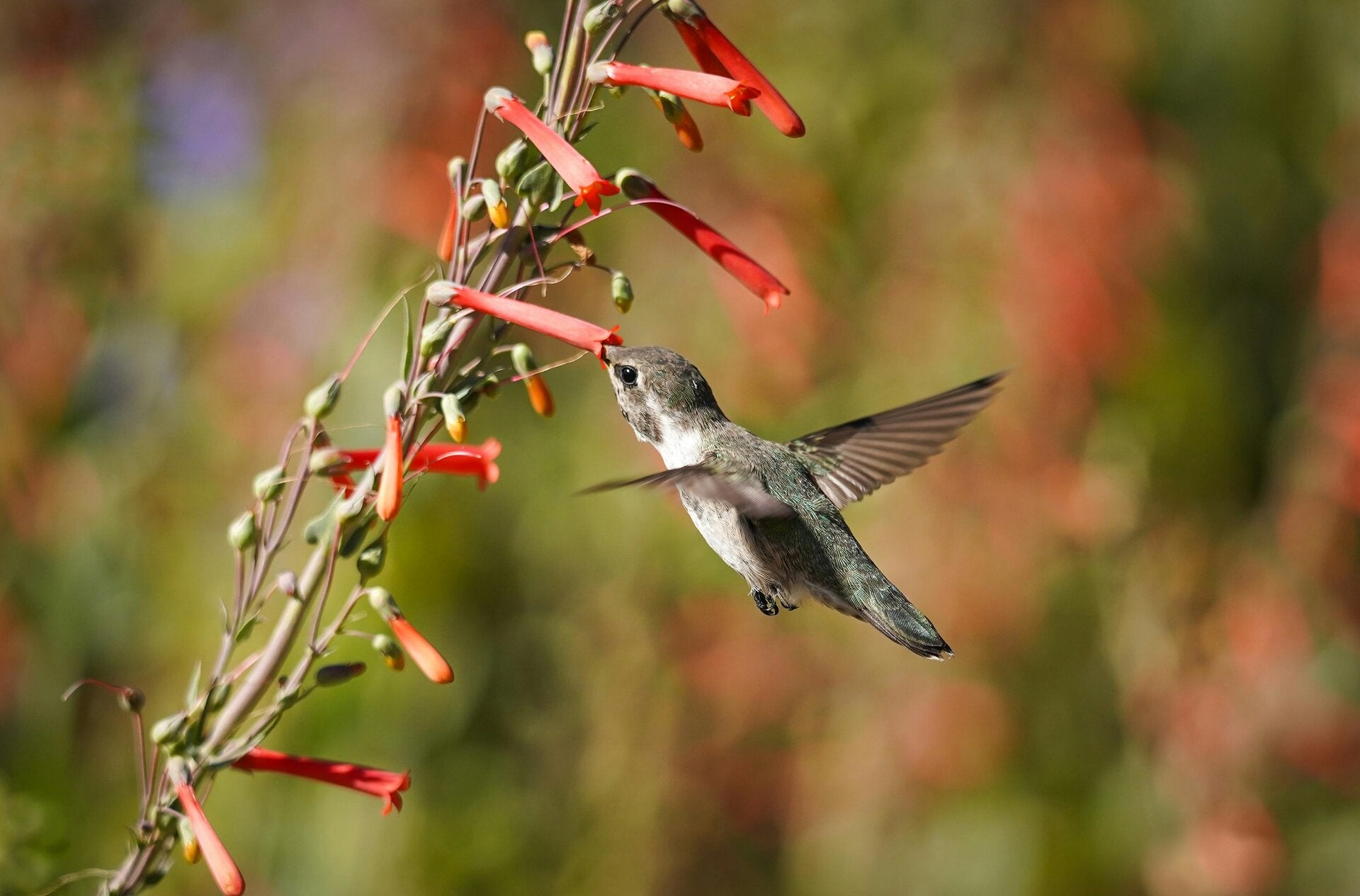
When people think about pollination, bees usually come to mind first. While insects do play a huge role, many birds are also important pollinators, especially in warmer climates and specialized ecosystems. Birds such as hummingbirds are drawn to brightly colored, nectar-rich flowers. As they feed, pollen sticks to their feathers and beaks, traveling with them from plant to plant.
This movement of pollen allows plants to reproduce, producing seeds and fruit that support entire food webs. In some regions, certain plants have evolved specifically to be pollinated by birds rather than insects. Trumpet Vine, Cardinal Flower, Fuschia, and Coral Honeysuckle all have tube-like flowers that make it difficult for insects to pollinate but are perfectly shaped for humming bird beaks. These flowers are often in red hues that are appealing to birds but difficult for some insects to see.
Bird-pollinated plants often produce large amounts of nectar to meet birds’ high energy needs. Their sturdy flowers can withstand repeated visits by beaks rather than delicate insect legs. Over thousands of years, plants and birds have shaped each other’s evolution, creating relationships so specialized that one may struggle to survive without the other.
This is why protecting bird populations also protects plant diversity. When bird numbers decline, plants that rely on them may produce fewer seeds, leading to cascading effects throughout ecosystems.
Many native, bird-pollinated plants can be grown in home gardens. Planting them adds beauty and it actively supports local bird populations and the ecosystems around your home. Even small spaces can become important stepping stones for migrating or overwintering birds.
How Birds Shape Forests with Seed Dispersal
One of the most powerful roles birds play happens quietly and often unseen. When birds eat fruit or berries, they also consume the seeds inside. Many of those seeds pass through the bird’s digestive system intact and are deposited far from the original plant. This natural process, known as seed dispersal, allows plants to spread into new areas.
Mistletoe is one of the strongest examples of bird-dependent dispersal. Its sticky white berries are eaten by birds, and the seeds are either excreted or wiped off onto tree branches. The seeds are coated in a glue-like substance that helps them stick exactly where they need to grow. Without birds, mistletoe cannot spread at all. The plant has no alternative dispersal method, making birds absolutely essential to its survival.
In tropical ecosystems, fig trees are considered keystone species, and birds are their primary seed dispersers. Many fig species rely almost entirely on birds and bats for dispersal, and without them, entire ecosystems would collapse. Hundreds of animals depend on fig trees for food, so bird dispersal of figs supports entire food webs
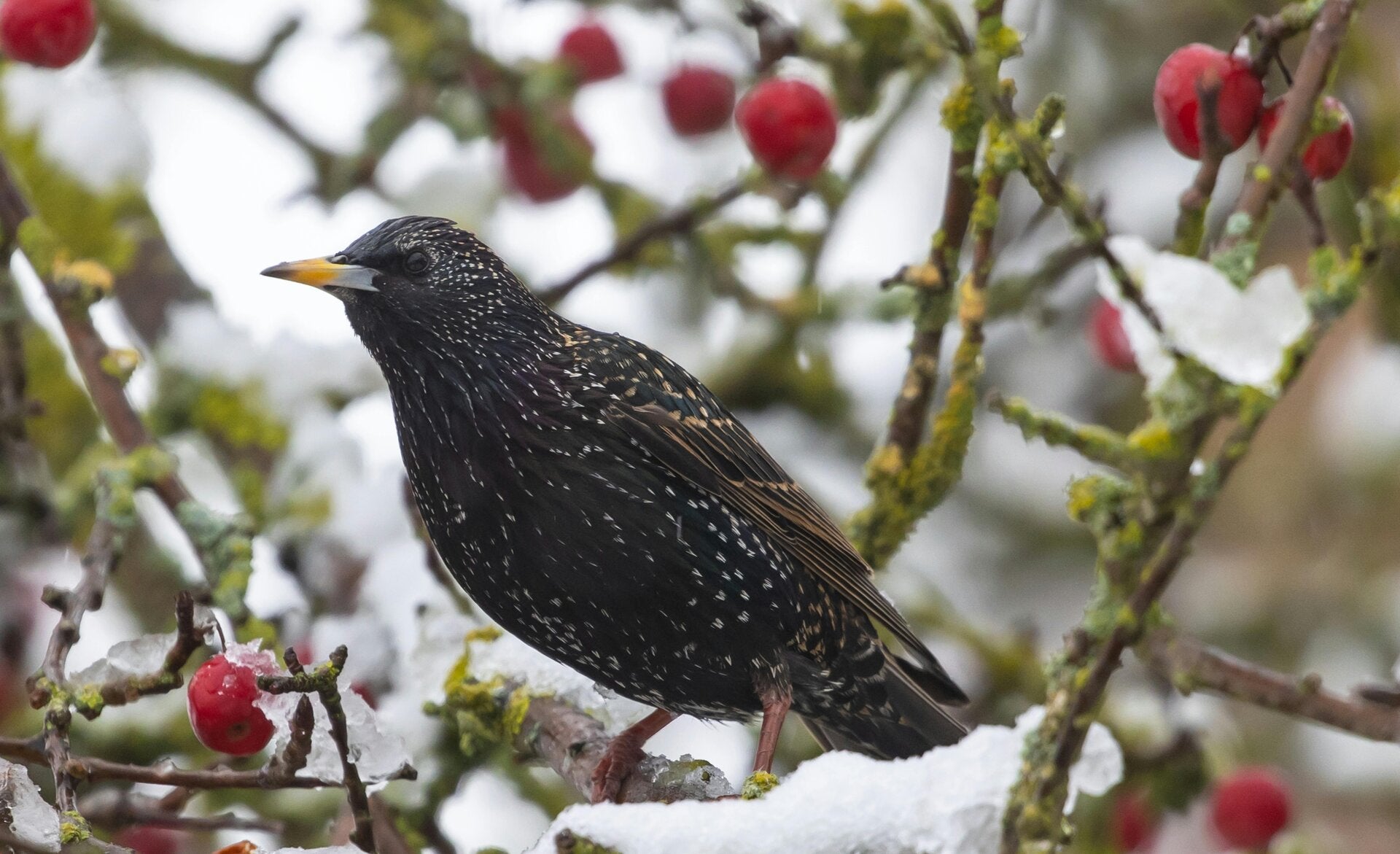
Many trees like cherry, pinyon, avocado or whitebark pine that rely on birds have seeds are often too heavy for wind dispersal and too delicate to survive falling far on their own. Birds provide three crucial services at once: distance, placement, and fertilization. They carry seeds far from the parent tree, deposit them in new habitats, and leave them in nutrient-rich droppings that boost germination.
Over time, birds help forests recover after disturbances like fires, storms, or human development. They transport seeds across rivers, over mountains, and into open spaces where new plants can take root. Some tree species rely almost entirely on birds to spread their seeds. Without birds, forests would grow more slowly, lose diversity, and struggle to adapt to environmental change.

Nature’s Pest Control System
Birds are also incredibly effective at controlling insect populations. Many species rely on insects as their primary food source, especially during nesting season when they need to feed growing chicks. A single family of birds can consume thousands of insects in a short period of time. Last summer I dug up over 100 grubs from my garden and placed them in a bucket thinking I would give them to my sister's chickens but a few robins came down from the tree and cleaned that bucket in less than hour.
This natural pest control helps keep ecosystems balanced and reduces the need for chemical pesticides in agricultural and garden settings. When bird populations decline, insect populations often rise unchecked, which can damage crops, forests, and even spread disease. In this way, birds act as a living, self-regulating system that protects plants and maintains ecological stability. Alternatively, using pesticides can eliminate or contaminate essential food sources for birds and is a contributing factor to the decline of bird populations.

Birds in the Food Chain: Keeping Balance
Birds occupy many levels of the food chain. Some are predators that hunt insects, rodents, or fish, while others are prey for larger animals. Because they move between land, water, and air, birds connect different parts of ecosystems in ways few other animals can. I personally am grateful for the owls and hawks that live in my backyard for keeping our rabbit and rodent populations down. Unfortunately, it also means we must keep a watchful eye on our bearded dragon Simon when he's enjoying time in his outdoor enclosure as we don't want him to become bird food.
The presence (or absence) of birds often reveals the health of an environment. Scientists study bird populations closely because changes in bird behavior, migration, or numbers can signal larger environmental problems such as pollution, habitat loss, or climate change. In this way, birds serve as living indicators, helping humans understand what is happening in the natural world.

Why Should We Notice Birds in Winter?
Winter strips ecosystems down to their essentials and birds shift from roles like pollination to survival. Many species rely heavily on berries, seeds, and overwintering insects, which means they continue dispersing seeds even when plants are not actively growing. This is one reason why I never clean out my garden beds in the fall and leave everything until the spring. It provides food for the birds and while those seeds may not sprout until spring, but they are already being moved into new locations, quietly shaping what future landscapes will look like.
Birds are also especially important pest regulators during winter. As insects hide beneath bark, in leaf litter, or in soil, birds forage relentlessly, removing pests before populations can explode in spring. This reduces damage to trees and plants long before leaves return. A forest (or garden) that enters spring with fewer pests is healthier and more resilient, thanks in part to winter bird activity that often goes unnoticed.
Winter also makes birds more visible as indicators of ecosystem health. Scientists often track winter bird populations to detect shifts related to climate change, habitat loss, or food availability. Earlier migrations, altered ranges, or declining winter survival rates can signal broader environmental changes long before they are obvious elsewhere in the ecosystem.
When children notice birds thriving in a seemingly quiet, frozen landscape, it challenges the idea that nature “shuts down” in winter. Instead, they begin to understand ecosystems as dynamic systems that adapt and reorganize with the seasons. Birds become a living example of resilience, adaptation, and interdependence which are concepts that are foundational to ecological thinking.

Ways to Celebrate National Bird Day
National Bird Day is a wonderful opportunity to slow down and help kids notice the living world right outside their door. One of the simplest ways to celebrate is through observation. Whether it’s watching birds at a backyard feeder, looking out a classroom window, or taking a short winter walk, children can practice noticing bird behaviors, colors, calls, and movements. Even in January, birds are busy foraging, communicating, and surviving the cold, which makes this a powerful reminder that ecosystems stay active year-round. A notebook, sketch page, or simple discussion afterward can turn a few minutes of watching into meaningful science learning.

Parents and teachers can also use National Bird Day as a chance to connect birds to bigger environmental ideas. Talking about what birds eat, where they find shelter in winter, or how they help plants and trees introduces systems thinking in a very natural way. Reading a short passage about birds, researching a local species, or comparing migratory birds to year-round residents helps kids understand how animals adapt to seasonal changes.
Hands-on activities make the day especially memorable. Creating a simple bird feeder, designing a bird-safe window decal, or planting native plants for future seasons allows kids to feel like they are helping birds do their important work. In classrooms, students might model seed dispersal, trace a food chain, or explore how losing one species affects an entire ecosystem. These activities reinforce the idea that birds are not separate from us, but deeply connected to the health of our shared environment. Download our FREE birdfeeder project here!

Why Protecting Birds Matters
Despite their importance, birds face growing threats. Habitat loss, window collisions, light pollution, climate change, and pesticide use have all contributed to declining bird populations worldwide. Organizations such as National Audubon Society and Cornell Lab of Ornithology work to study, protect, and advocate for birds, but everyday actions also make a difference. Simple choices like planting native plants, keeping cats indoors, providing clean water, and making windows safer can help birds survive and thrive. Protecting birds means protecting entire ecosystems, including the systems that support human life.
National Bird Day is about fostering appreciation and care for these important creatures. When children learn how birds pollinate plants, spread seeds, control pests, and support food webs, they begin to see nature as an interconnected system rather than isolated facts. Celebrating birds can build empathy, environmental awareness, and a sense of responsibility that can last far beyond a single day.

Add comment
Comments