

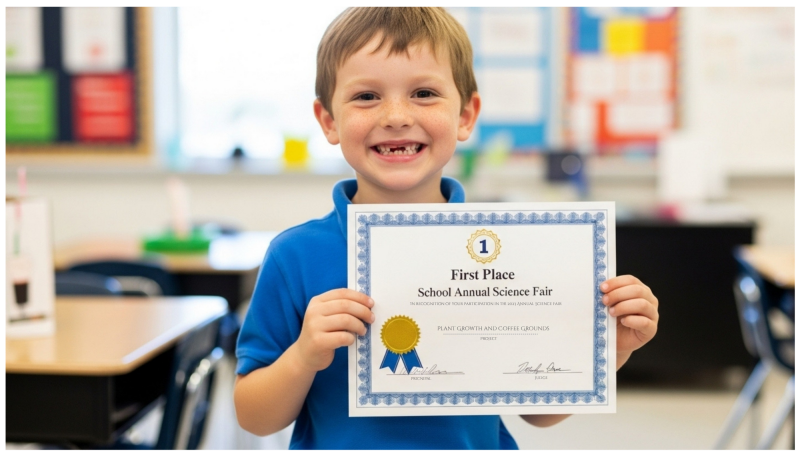
This week I hosted the Science Fair at my favorite elementary school, and honestly, it went way smoother than in the past. It wasn’t because the projects were simpler or the expectations were lower, but because I think I’ve finally homed in on a structure that works for even our youngest students. This is going to be one of my longer blog posts because I really want to share aaaaalllll the details of how we ran this science fair and how it revolutionized how I will run them in the future.
Science fairs are an amazing opportunity for students to exercise their knowledge of the scientific method and to experience the rewarding feeling of completing a project from start to finish. But often times these events turn into a stressful, last-minute scramble with overwhelmed kids and over-involved parents.
I was a science fair judge for years and I’ve seen firsthand what works and what doesn’t. A successful science fair isn’t about perfect posters or complicated experiments. It’s about giving students the chance to think, explore, and explain their ideas.
When I was tasked with implementing a science fair for elementary students in 1st – 5th grade, I quickly learned that it required an entirely different strategy than I had been using for my older students. If you’re planning a science fair (for any grade) here’s how to make it run smoothly so it can be a positive experience for everyone involved.
Start With the Right Expectations
Before you plan anything, it’s worth pausing and asking: what is the goal of this science fair? I have been a judge for science fairs across many grade levels, and not all science fairs serve the same purpose. One of the biggest misconceptions about science fairs is that they should all look the same, when in reality their purpose should shift based on the age of the students and the goals of the school. In early elementary, the focus should be on curiosity and confidence where students notice the world around them, ask simple questions, and talk about what they observe without worrying about getting everything “right.”
By upper elementary, students are ready to start learning the structure of the scientific process, asking testable questions, organizing their thinking, and explaining their results, which is often where science fairs are most impactful. In middle school, the emphasis shifts toward independence and critical thinking, with students taking more ownership over their project design and analysis, while high school science fairs should push toward scientific rigor, data interpretation, and strong communication skills, including the ability to answer questions and defend their work.
Additionally, schools also need to be clear about whether their science fair is meant to be competitive or more of a showcase, since those goals lead to very different experiences. When the structure of the science fair aligns with its purpose, everything runs more smoothly and students get far more out of the experience.
A lot of people assume a science fair is about polished displays or impressive results. This might be true for the state and national level. However, for the majority of schools, this is not the goal. It’s about the process. It’s about students asking a question, trying something out, and then making sense of what happened. If a student can clearly explain what they did and why, that’s a successful project even if the experiment didn’t go as expected. In fact, those are often the best ones!
Choose a Format That Fits Your Students
Not every science fair needs to look the same, and trying to force a one-size-fits-all model is where unnecessary stress creeps in. For elementary students especially, simpler is almost always better. A school-wide event can be great, but it doesn’t need to be overly formal or highly competitive to be meaningful. In many cases, a more relaxed, showcase-style approach leads to better learning and a more positive experience.
One of the biggest decisions you’ll make early on is how presentations and judging will work. That choice alone will shape the entire event. Traditional science fair judging asks a lot of young students. They’re expected to stand by their poster for long stretches of time, wait for judges to come around, and answer questions from unfamiliar adults (often repeatedly). For many elementary students, that is stressful and exhausting and really deters them from wanting to participate in science in the future.
A Novel Approach to the Science Fair
When I started organizing the science fair at an elementary school 3 years ago, I was extremely hesitant. I was skeptical that 1st graders would carry out an entire project and even more skeptical that they would stand there and present it to judges. A parent suggested a different model for presenting their projects that has completely changed how I will forever do science fairs.
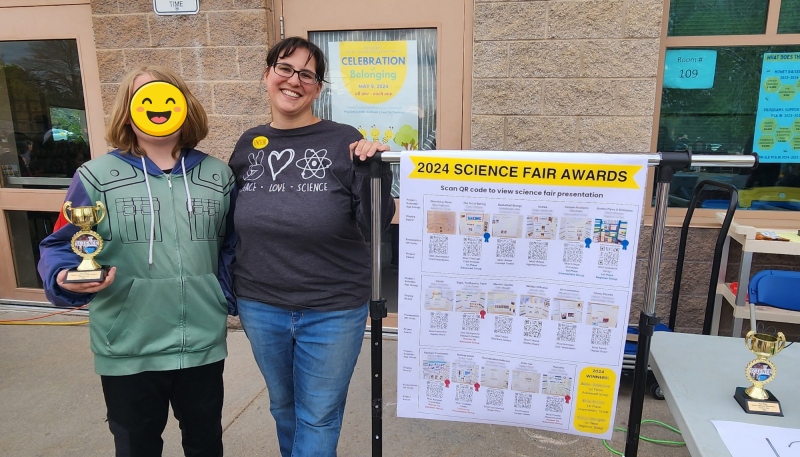
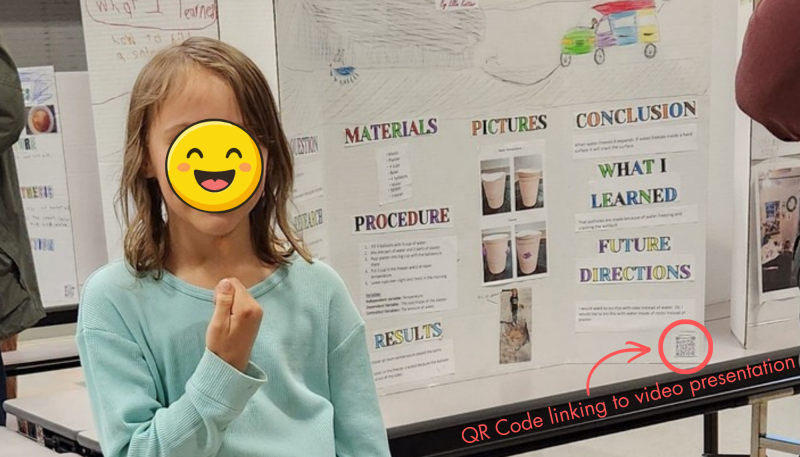
Our students still conduct their experiments and create their posters as they would for any science fair. But, instead of having judges circulate during the fair, each student meets with an interviewer ahead of time. The interviewer asks the student a consistent set of questions, which they get in advance, and their responses are recorded on video. Those videos, along with photos of their posters, are then shared with judges digitally. Additionally, a QR code is placed on each poster that links to the student’s video presentation so that families, teachers, and other students can watch the presentation anytime, regardless of whether or not the student is standing there.
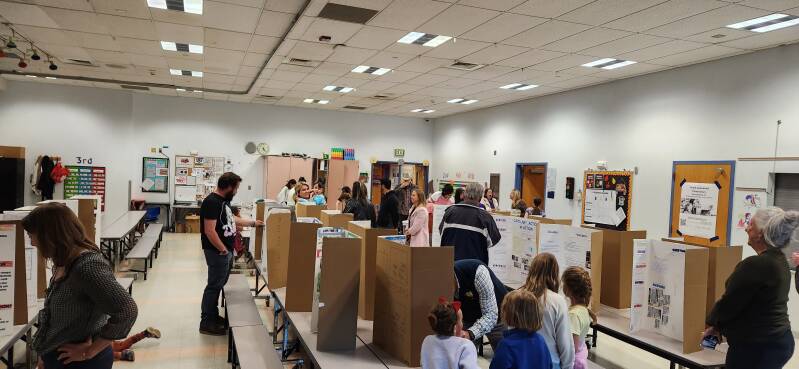
The driving force behind this method was eliminating the need for students to stand next to their posters waiting, which if you’ve ever worked with first graders, you know is an impossible expectation. However, over the past few years we have realized there are additional benefits to this approach. Students know the questions in advance, which helps them prepare thoughtful answers instead of feeling caught off guard. This is so important for young students who get distracted by large words like “hypothesis” and “procedure.” The one-on-one format of a private interview takes away the pressure of presenting in front of a crowd, giving the student the opportunity to truly share their excitement for the project.
From an organizational standpoint, it makes everything easier. Judges can review projects on their own time, without being rushed or needing to attend the event in person. You don’t need any coordinators to usher judges from place to place and ensure the students are present. Plus, when judging happens separately, the science fair itself can stay short, engaging, and much less chaotic. This model works incredibly well for elementary students. It removes unnecessary pressure and keeps the focus of the projects on understanding and communication.
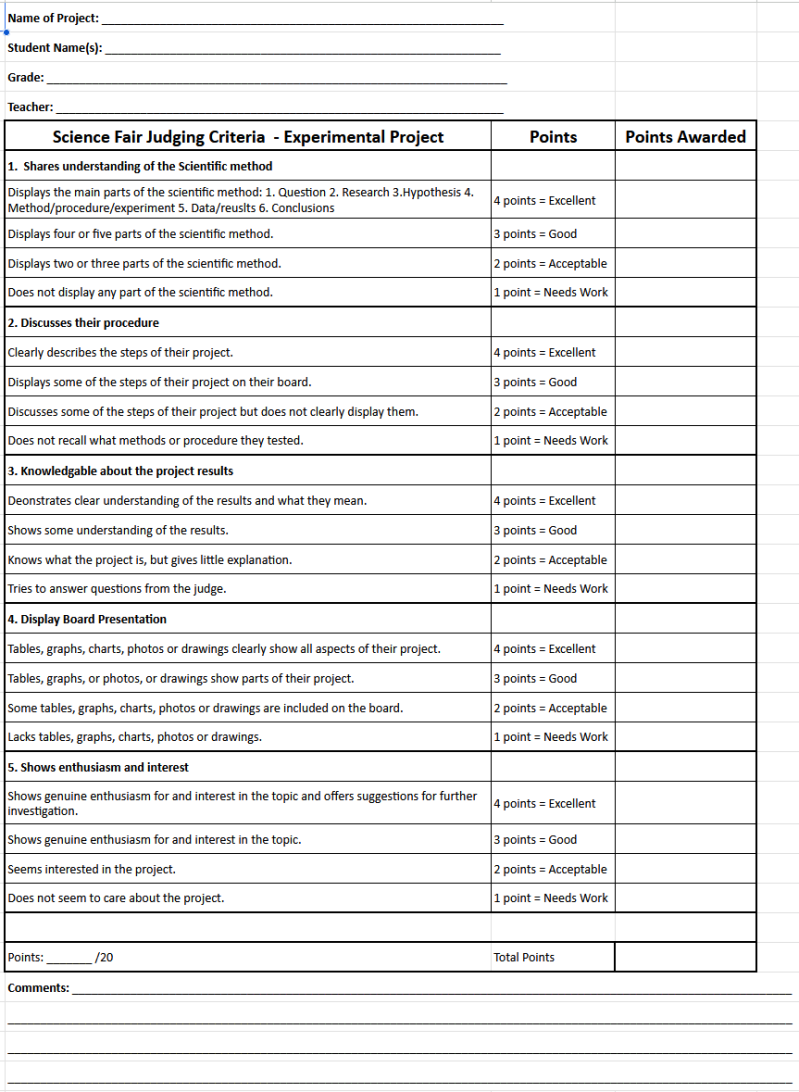
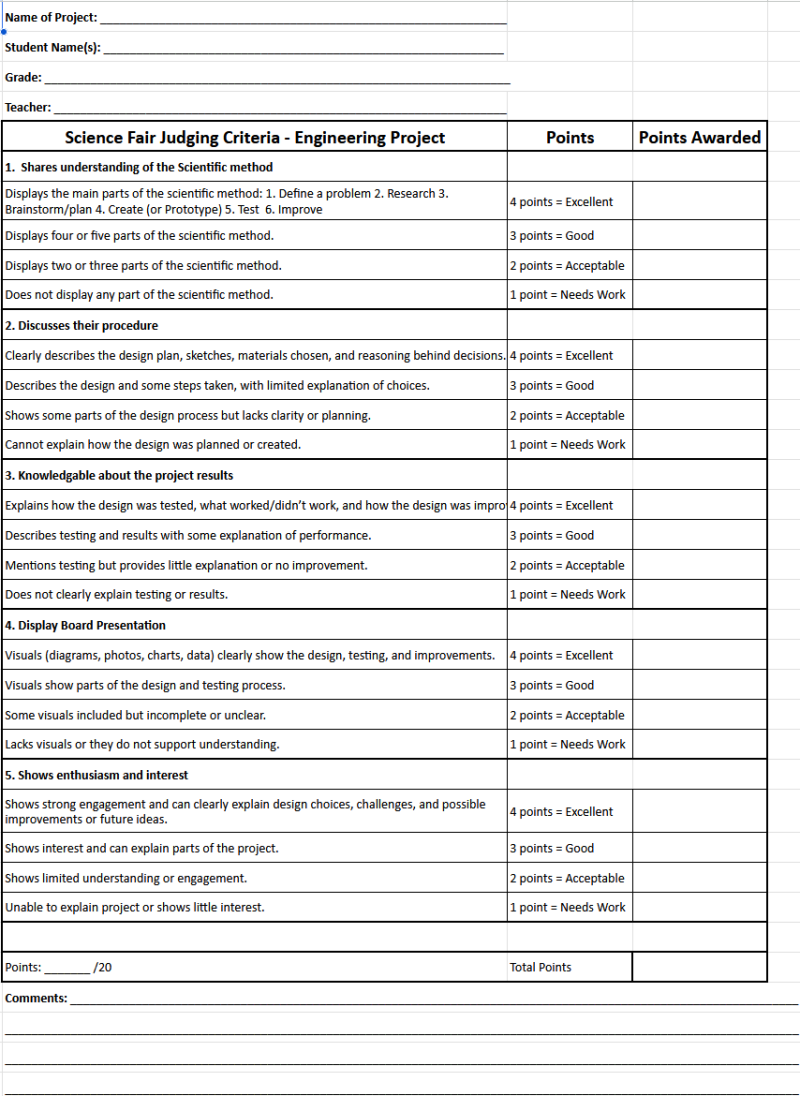
For the judging aspect, we have a simple rubric to score each project. While we do have a winner for each grade level based on the highest score, we also have individual awards for each and every presentation to highlight the things they did well. I have found this to be a perfect blend of competition and showcase styles of the science fair. Each student is acknowledged for their effort, but there is also a clear winner which instills a bit of rigor to their work.
That said, our approach is not the right fit for every age group. Older students benefit from practicing live presentations and thinking on their feet. But for younger learners, this model creates a much more supportive and developmentally appropriate experience.
Give Yourself (and Families) a Real Timeline
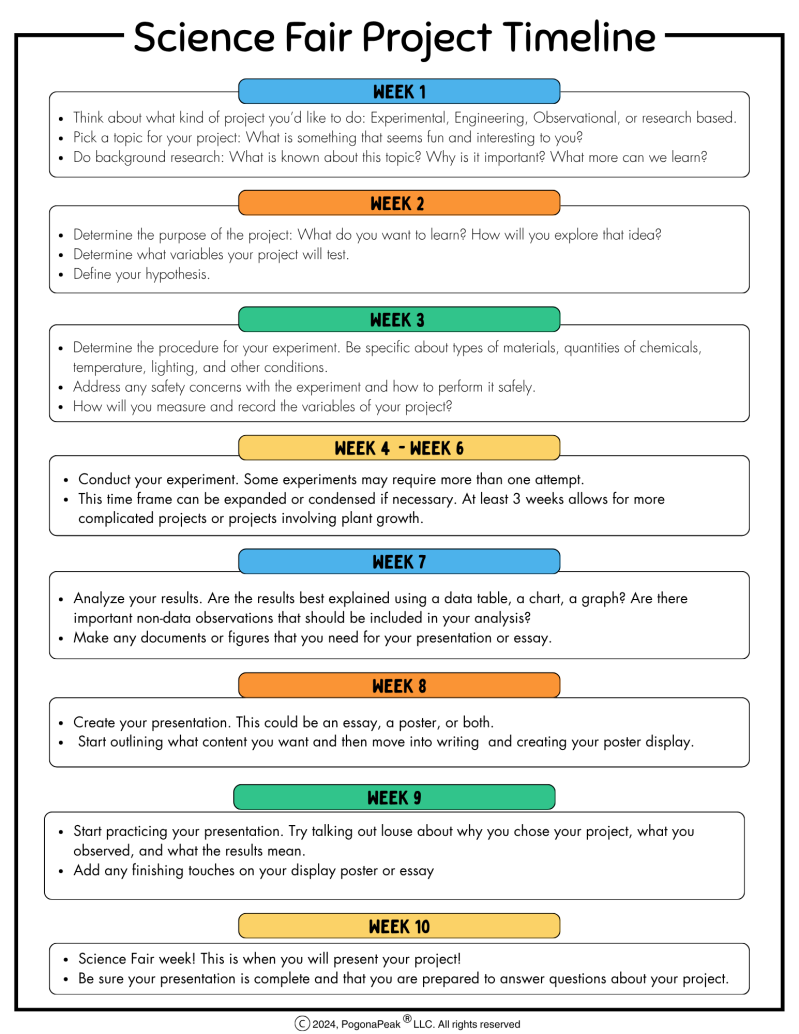
Truthfully, I am still working on getting the timeline for our science fair just right. Our science fair lead up has been as short as a month and as long as an entire semester. This year we had about six weeks, which felt a bit rushed, especially for one student who was trying to grow plants. I feel like ten weeks is ideal.
Regardless of your time frame, the students need a clear expectation of what should be happening throughout those weeks. Without a clear structure, projects get pushed off until the last minute, and suddenly everyone is scrambling to pull something together and feeling frustrated in the process.
A simple, spaced-out timeline makes a huge difference. Start by introducing the science fair 8 - 12 weeks in advance, giving families time to understand expectations and start thinking about ideas. I strongly encourage a required parent meeting where you explain the rules and timeline so that everyone is on the same page. A few weeks later, students should have chosen their project. From there, regular check-ins help keep things moving so no one falls too far behind.
At my favorite elementary school, we host the science fair as an after-school club where we have weekly in-depth discussions of each aspect of the science fair from picking a project to choosing variables, collecting data, analyzing the results, and designing the layout of the posters. I realize most people don’t have that luxury, but taking a few minutes each week to have the students write a quick update, or even just a show of hands to gauge “who has picked a topic” or “who has analyzed their data” helps keep it top of mind. By the time the fair approaches, students should be putting polishing details on their presentations, not scrambling to do their experiments. That said, as a self-proclaimed master procrastinator (which I recently learned was actually a symptom of my undiagnosed ADHD), my projects were always pulled together at the last moment. If you want to avoid that last minute stress that I (and my parents) always endured, I have a sample timeline that you can download for free HERE.
Help Students Choose Better Projects
Another place where science fairs fall apart is in the projects themselves. Students often pick projects that are either too complicated, too vague, or not really theirs to begin with. And once that happens, everything else becomes harder.
A strong project doesn’t need to be impressive or groundbreaking. It needs to be manageable and meaningful to the student. If they’re genuinely curious about the question and can explain what they’re doing, they’re on the right track. This is especially true for elementary and middle-school students but truly applies to everyone.
If a project feels like something an adult designed or something the student copied from the internet, it usually shows. The student struggles to explain it, and the learning gets lost. It’s true that many of my younger students do copy projects they find in books or on the internet (I have had several students recreate Mark Rober videos). While this doesn’t follow traditional science fair guidelines, I don’t mind when younger students do this. I just want them to be interested and engaged in science. I encourage them to put their own spin on the projects they see in books on or YouTube (test a different variable, try new conditions, etc…), but as long as they can show that they followed the scientific method and can explain their process and the results, I feel like the goal for our particular science fair has been met.

Support Students (Without Taking Over)
Adults naturally want to help, but there’s a fine line between supporting a student and unintentionally taking over the project. When that line gets crossed, the final product might look impressive, but the student misses out on the learning. Obviously, the line moves depending on the age of the student and younger kids will require much more help than older ones. I’ve found that by 4th grade, most students can plan and execute a project on their own with minimal help from adults.
The most helpful support usually comes in the form of asking questions, procuring materials, and encouraging kids to think through variables and challenges. The goal is to guide, not direct. If a student owns their project they gain far more from the experience.
Prepare Students to Share Their Thinking
When it comes time to present, students don’t need a memorized script. What they need is a clear understanding of their own work. Encouraging them to talk through their question, what they did, what they observed, and what they think it means is usually enough. When they understand those pieces, their confidence follows.
Keep the Fair Setup Simple and Functional
When you set up your science fair, ensure that the space is easy to navigate, students have a clear place to display their work, and visitors can move through the event without confusion. Personally, I like arranging the projects by grade-level but some schools prefer alphabetical order of last name or by project type (chemistry, physics, biology, engineering).
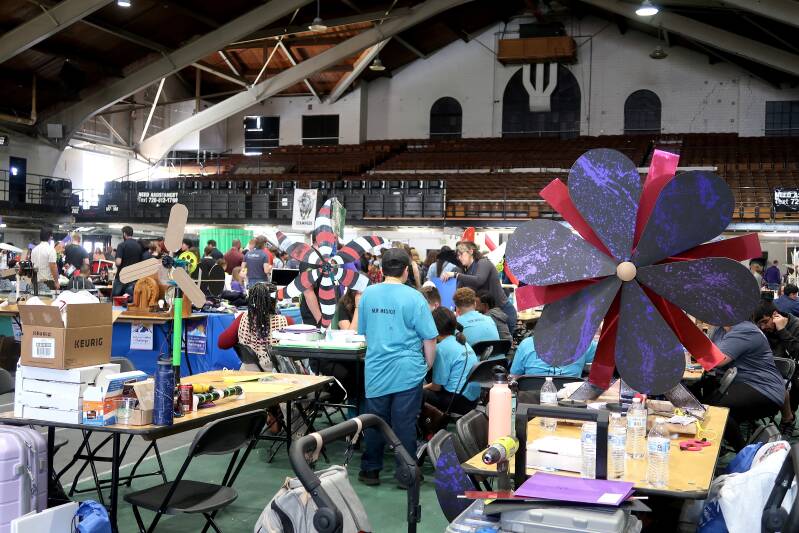
Many schools use the cafeteria to host their fairs because there are already tables to set the posters on but some schools like to display the posters on easels in the gym. One school where I judged a fair arranged posters all throughout the hallways, which I loved because it wasn’t as noisy or crowded.
Remeber that no matter how well you plan, a few things will go sideways. Some students will fall behind. Others will finish but struggle to explain their project. Setup might feel a little overwhelming. The event might feel crowded and noisy. Or, a set of posters might go missing due to a well-intentioned teacher putting them in a “safe place” during the school day. The key is building in enough structure ahead of time to minimize these issues and staying flexible when they happen.

At the end of the day, a science fair doesn’t need to be perfect to be successful. If students feel proud of what they did, understand their project, and walk away a little more curious than they started, that’s a win in my opinion.
The goal isn’t to create the most impressive event or generate groundbreaking research. It’s to create an experience that helps kids start to see themselves as capable of asking questions, exploring ideas, and making sense of the world around them. And ideally, it leaves them wanting to keep discovering.
Want a Step-by-Step Guide?
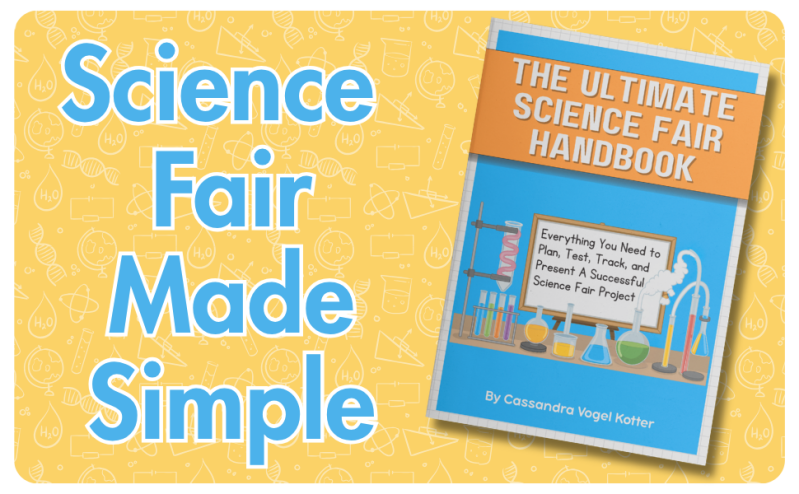
If you’re looking for more structure, my Science Fair Handbook walks students and families through the entire process from choosing a project to confidently presenting their results.
Add comment
Comments